Remember that time your little one just wouldn’t put down their favorite toys? That bond between a child and their playthings is something special. Choosing the right 8 toys can spark imagination, encourage learning, and provide endless hours of fun. This guide will explore some fantastic toy choices, giving you the knowledge to pick toys that match a child’s age, interests, and developmental needs. You’ll gain a deeper appreciation for the role of play in a child’s life and learn how to select toys that nurture their growth.
Key Takeaways
- Discover the benefits of different types of toys for child development.
- Find age-appropriate suggestions to ensure safety and enjoyment.
- Learn about toys that promote creativity, problem-solving, and social skills.
- Understand how to select toys that encourage active play and physical activity.
- Explore toy options that cater to various interests and learning styles.
- Gain insight into the features to consider when making toy selections.
The Wonders of Play: A Journey Through 8 Toys
Play is more than just fun; it’s a vital part of a child’s development. It’s how they learn about the world, develop social skills, and express their creativity. Choosing the right toys can make a big difference in a child’s growth. Toys encourage different skills and provide opportunities for children to try out various roles and scenarios. Play is essential for building a strong foundation for future learning. Selecting the right 8 toys becomes crucial for parents. Let’s explore some amazing toy options that will help support a child’s development.
Building Blocks: The Foundation of Creativity
Building blocks are a classic toy, and for good reason. They allow children to use their imagination to build whatever they can dream up. They also help develop important skills. From simple wooden blocks to more complex sets with different shapes and sizes, these toys are perfect for children of various ages. Blocks provide endless possibilities for construction. The different types of blocks encourage creativity and promote fine motor skills. Let’s explore how these toys can benefit children.
- Fine Motor Skills Development: Handling and manipulating building blocks helps children develop fine motor skills. Picking up, stacking, and arranging the blocks require hand-eye coordination and precise movements. These skills are essential for later activities like writing and drawing.
- Spatial Reasoning: Playing with blocks helps children learn about shapes, sizes, and space. They must consider how the blocks fit together and how to create stable structures. This experience helps them develop spatial reasoning skills, which are useful in subjects like math and science.
- Creativity and Imagination: Building blocks have no rules, giving children the freedom to build whatever they want. They can construct houses, castles, cars, or anything else they imagine. This freedom encourages creativity and imagination.
- Problem-Solving Abilities: When a tower falls or a structure isn’t stable, children learn to problem-solve. They experiment with different approaches to achieve their goals.
Building with blocks gives kids a workout for their fingers and hands, preparing them for activities that require delicate movements. Children also develop hand strength. The simple act of putting a block on top of another becomes a learning opportunity for them.
Children will also begin to understand concepts such as balance and symmetry. Building with blocks encourages children to visualize and plan ahead. It enhances their ability to think three-dimensionally. These skills contribute to a child’s overall cognitive development.
Children often use building blocks to create and act out stories. This imaginative play promotes storytelling. Building blocks foster a sense of self-expression. They help children develop their ability to think creatively.
They learn how to find solutions independently. By correcting mistakes and trying again, children develop resilience. Building with blocks teaches children to approach challenges. They become better at thinking through problems.
Dolls and Action Figures: Nurturing Empathy and Imagination
Dolls and action figures provide opportunities for children to engage in imaginative play and role-playing. These toys allow children to act out stories, explore different roles, and develop social skills. The benefits of dolls and action figures are wide-ranging. Dolls allow for caregiving, while action figures allow for the construction of great worlds and stories. Let’s see how these toys impact children’s development.
- Role-Playing and Social Skills: Dolls and action figures offer opportunities for children to act out scenarios. This role-playing helps children understand social situations, develop empathy, and improve communication skills.
- Emotional Development and Empathy: Playing with dolls can encourage empathy and nurture emotional intelligence. Caring for a doll teaches children about responsibility and compassion.
- Imaginative Play and Storytelling: Dolls and action figures spark children’s imaginations. They can create stories, develop characters, and act out scenes. This type of play helps children improve their language skills and creative thinking.
- Symbolic Representation: Dolls and action figures can stand in for real people or characters. This symbolic representation helps children understand abstract concepts and practice creative thinking.
They learn to consider other people’s feelings and perspectives. Children often create their own stories and dialogues. They develop critical social skills through imaginative play with these toys. Dolls and action figures help children grasp social conventions.
Children practice taking care of others, which enhances their emotional abilities. Dolls and action figures provide children with opportunities to act out real-life situations. Playing with dolls encourages them to develop emotional connections.
Children create different worlds with these toys. Their ability to tell stories and express themselves is enhanced. Children learn to create scenarios, make up dialogues, and create complex storylines.
Children learn to connect these toys with real-world scenarios. It allows them to experiment with different concepts. It helps children develop skills of critical thinking and creative expression.
Art Supplies: Cultivating Creativity and Self-Expression
Art supplies like crayons, paints, and clay provide children with creative outlets. They can create artwork, express their emotions, and explore colors and textures. Art supplies offer a variety of benefits. They enhance creativity, improve fine motor skills, and encourage self-expression. Art is important for a child’s mental and creative growth. Let’s explore how these toys influence child development.
- Creativity and Imagination: Art supplies allow children to create anything they can imagine. They can draw, paint, sculpt, and experiment with different materials. This freedom nurtures creativity and helps children explore their imaginations.
- Fine Motor Skills Development: Using art supplies, like pencils, crayons, and brushes, helps children develop fine motor skills. Holding tools, controlling pressure, and making detailed movements build hand-eye coordination and finger dexterity.
- Emotional Expression: Art allows children to express emotions. They can use colors, shapes, and textures to communicate feelings that they may not be able to articulate verbally.
- Color Recognition and Sensory Exploration: Art supplies introduce children to a world of colors, shapes, and textures. This exposure helps them learn about the world around them.
Art provides a safe space for children to express their thoughts. Children develop their unique style through experimentation. Art helps them grow in their ability to think creatively.
Children learn precision through art. It boosts hand-eye coordination, helping them perform tasks that require fine motor skills. Art helps children learn to use their hands effectively.
Through art, children learn to understand and deal with feelings. Art can be a source of stress relief. Children learn to find ways to communicate their feelings.
Art also involves sensory experiences. Children explore the feel of different materials. They learn to recognize different colors and shapes.
Board Games and Puzzles: Sharpening Cognitive Skills
Board games and puzzles provide a fun way for children to develop cognitive skills. They help improve problem-solving, strategic thinking, and memory. The positive impact of board games and puzzles is undeniable. They are great tools for learning. Let’s explore the benefits of these toys.
- Problem-Solving Skills: Board games and puzzles often require children to solve problems. They must think strategically, plan their moves, and find solutions. This process builds their problem-solving skills.
- Strategic Thinking: Many board games call for strategic planning. Children learn to anticipate their opponent’s actions and develop a plan to win. This process encourages strategic thinking.
- Memory and Concentration: Some board games and puzzles require children to remember information, such as the positions of pieces or the rules of the game. This memory work helps improve concentration.
- Social and Communication Skills: Board games involve social interaction, teaching children to follow rules, take turns, and interact with others. This interaction helps improve their social and communication skills.
Puzzles teach children to look for patterns and connections. Board games encourage them to consider the consequences. Problem-solving is a critical life skill that board games and puzzles help develop.
Board games help children learn to make quick decisions. Children develop their skills of long-term planning and decision-making. Board games are tools for sharpening skills.
Puzzles and board games sharpen memory and attention. They teach children to keep focus on a task, improving memory abilities. They help improve memory and attention.
Children learn to handle both winning and losing gracefully. Board games encourage children to collaborate. The social aspect of board games helps improve a child’s social capabilities.
Vehicles and Transportation Toys: Promoting Physical Activity
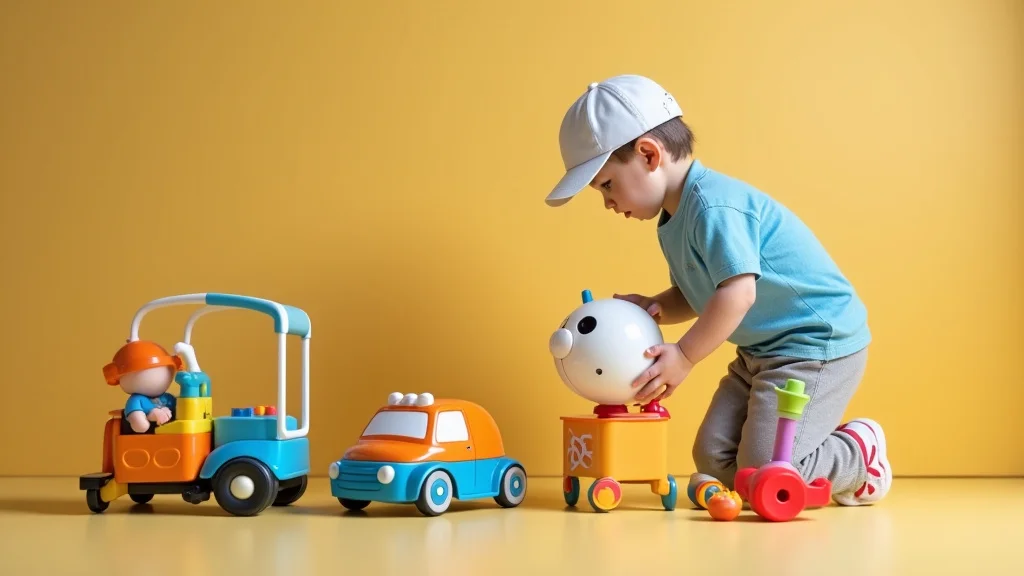
Vehicles and transportation toys, like cars, trucks, and trains, encourage active play and physical activity. Children can push the toys around, create roadways, and imagine scenarios. These toys provide opportunities for physical play and imaginative exploration. Let’s explore their advantages.
- Gross Motor Skills Development: Playing with vehicles often involves physical activity. Children move the vehicles around, creating roadways and scenarios. This play helps develop gross motor skills, like running and crawling.
- Imaginative Play and Storytelling: Children can create stories. They often come up with their own scenarios. This type of play boosts their imagination and language skills.
- Spatial Awareness: As children push and move their toy vehicles, they learn about space and distance. This understanding helps them develop their spatial awareness skills.
- Coordination and Fine Motor Skills: Toys such as model cars and trains require fine motor coordination. Children develop the small muscles in their hands and fingers.
They can also play together, building social skills. Physical activity helps improve coordination and balance. Children enhance their gross motor skills.
Children make up stories, scenarios, and dialogues. They develop their abilities to create imaginative scenarios. Vehicles help children create their own worlds.
Children learn how to navigate their vehicles in different environments. They develop a grasp of distance, space, and size. Vehicles help in developing spatial awareness.
These toys encourage children to make precise movements. This helps them with hand-eye coordination. Fine motor skills improve as they play.
Outdoor Play Equipment: Fueling Physical Development
Outdoor play equipment, like balls, bikes, and climbing structures, encourages physical activity and exploration. These toys provide opportunities for children to move around, improve coordination, and get some fresh air. Outdoor play equipment provides many benefits. It helps improve physical skills, social skills, and the overall well-being of the child. Let’s explore these benefits.
- Physical Activity and Gross Motor Skills: Outdoor play equipment promotes physical activity, which is important for physical fitness. Climbing structures, swings, and slides help improve children’s gross motor skills.
- Coordination and Balance: Outdoor play equipment requires children to use their bodies. They must balance and move their bodies in different ways. This helps improve coordination and balance.
- Social Interaction and Cooperation: Outdoor play often involves other children, and it gives opportunities for social interaction and cooperation. Children learn to share, take turns, and work together.
- Sensory Exploration and Exposure to Nature: Outdoor play provides opportunities for sensory exploration. Children can explore different textures, sounds, and smells. They also have an exposure to nature, which is good for their well-being.
Running, jumping, and climbing help children enhance strength. This play encourages physical activity. Outdoor toys help in children’s physical activity.
Playing on uneven ground challenges their balance. They must coordinate their movements to climb or swing. Outdoor play toys help with coordination and balance.
Children develop their social skills. They develop the ability to navigate social situations. Outdoor toys encourage the development of social skills.
Children engage with their environment. They develop an appreciation for nature. They develop an awareness of the world around them.
Musical Instruments: Encouraging Expression and Creativity
Musical instruments, like drums, xylophones, and toy pianos, encourage creative expression and cognitive development. Playing music offers many benefits. It improves memory, coordination, and emotional expression. Music is key for a child’s creativity. Let’s dive deeper into what these toys offer.
- Rhythm and Coordination: Playing musical instruments involves rhythm and timing. Children learn to coordinate their movements with sounds. This enhances their coordination.
- Auditory Skills and Memory: Playing instruments helps children improve their auditory skills, learning to recognize different sounds. This can help improve memory.
- Creative Expression: Musical instruments offer an outlet for creative expression. Children can experiment with sounds, create melodies, and express their emotions through music.
- Language Development: Music and language are closely linked. Playing instruments and singing can help children develop their language skills and vocabulary.
They develop a sense of rhythm and timing. Instruments help improve motor skills. Playing with musical instruments will enhance their coordination.
They learn to distinguish between different musical notes and rhythms. Playing music boosts their attention skills. Musical instruments help boost auditory skills.
They get a chance to be creative and express their emotions. Music promotes self-expression. Musical instruments help nurture creativity.
Children learn new words and phrases. They also develop the ability to express themselves. Music helps boost a child’s language skills.
Educational Toys: Supporting Learning and Development
Educational toys are designed to support a child’s learning and development. These toys cover areas like math, science, and literacy. They offer several advantages. They support cognitive development, improve problem-solving skills, and encourage exploration. Educational toys provide many advantages. Let’s explore how these toys benefit a child.
- Cognitive Development: Educational toys can help children develop cognitive skills, like problem-solving. They encourage critical thinking and promote learning.
- Literacy and Language Skills: Educational toys can help children improve their reading and language skills. They learn about letters, sounds, and words.
- Mathematics and Science Concepts: Educational toys can introduce children to math and science concepts. They learn about numbers, shapes, and scientific principles.
- Fine Motor Skills and Hand-Eye Coordination: Many educational toys involve hands-on activities. Children use their hands, which helps develop fine motor skills and hand-eye coordination.
They learn to think in new ways. These toys stimulate curiosity. Cognitive development is a key benefit.
They learn how to improve their vocabulary. They improve their reading and writing skills. These skills will help with language.
They start to understand basic concepts. They also get a chance to do some simple experiments. These toys help with math and science.
They have to make careful movements. This helps with precision and dexterity. Fine motor skills and hand-eye coordination will enhance.
Common Myths Debunked
Myth 1: Expensive Toys Are Always the Best
Many parents believe that buying expensive toys guarantees quality and educational value. However, the cost of a toy doesn’t always reflect its benefits. Simple toys, like building blocks or art supplies, can be just as beneficial. The key is to select toys that fit the child’s age, interests, and development goals, rather than focusing on the price tag. Sometimes, the most basic items can provide the greatest value.
Myth 2: Toys Should Be Gender-Specific
There’s a belief that certain toys are better suited for boys and others for girls. This is not true. All children should have the freedom to explore all types of toys. This will help them develop a well-rounded set of skills and interests. Allowing children to play with a wide variety of toys will broaden their opportunities. This will allow them to learn and explore different facets of the world.
Myth 3: Screen Time Is Always Bad
Many people believe that all screen time is bad. It can be useful in moderation. Educational apps and interactive games can provide learning opportunities. Excessive screen time should be balanced with other activities. This will help improve overall well-being. It is about balancing the usage and ensuring they are educational.
Myth 4: Educational Toys Are Only for Learning
Many people consider educational toys as solely for learning. However, many educational toys are very good at stimulating play. Many toys are both fun and educational. They are designed to support learning. These toys are designed to support and stimulate the child’s imagination.
Myth 5: Toys Should Be Perfect
The belief is that toys should be perfect to maximize their value. The truth is that toys do not need to be perfect to be useful. Simple toys can provide valuable experiences. Children often learn by experimenting. Toys give opportunities for learning.
Frequently Asked Questions
Question: What are the best toys for babies?
Answer: For babies, focus on toys that stimulate the senses and help with early development, such as rattles, soft blocks, and high-contrast picture books. Always make sure the toys are age-appropriate and meet safety standards.
Question: How can I choose toys that promote creativity?
Answer: Choose toys that allow for open-ended play, like art supplies, building blocks, and dress-up clothes. These toys have no prescribed way to play with them. They allow children to use their imagination and create their own stories.
Question: What safety considerations should I keep in mind when buying toys?
Answer: Always check for age recommendations and make sure the toys are made of safe, non-toxic materials. Avoid toys with small parts that could be choking hazards for young children.
Question: How do toys impact a child’s social skills?
Answer: Toys that encourage interaction, such as board games, dolls, and outdoor play equipment, help children learn to share, take turns, and communicate with others, improving their social skills.
Question: How do I store and organize my child’s toys effectively?
Answer: Use storage solutions that are easy for children to access and put away toys, such as bins, shelves, and toy chests. Regular decluttering can help maintain a manageable collection and prevent overwhelming play areas.
Final Thoughts
Choosing the right 8 toys for a child is a fun task. When carefully considered, they help children develop. The toys explored in this article—building blocks, dolls, art supplies, board games, vehicles, outdoor play equipment, musical instruments, and educational toys—all help in different ways. They nurture development by supporting creativity, problem-solving, and social skills. When selecting, remember to consider age, interests, and developmental stages to get the maximum benefit. Remember that play is more than just fun. It’s essential for learning and growth. Encourage children to explore, experiment, and develop. Your support and the right toys can make a lasting difference in a child’s life, helping them build a strong foundation for future learning. Provide toys that inspire and excite your child, and watch them thrive!